 UK: 0844 854 9218 | International: +44 (0)1488 580017

Certificates on the wall of a food business can create a good first impression. However, relying on certificates alone is unlikely to prove that every employee receives food safety training, keeps knowledge current, or applies it confidently in the workplace.
During an inspection, officers look for evidence that food safety is being managed effectively every day. This includes checking that employees understand the risks associated with their roles and have received suitable instruction, supervision and training.
For employers, up-to-date digital training records can provide a quick, reliable way to demonstrate this.
What does the law require?
Legislation requires food business operators to supervise food handlers and to train them in food safety and hygiene matters. Those responsible for setting up and monitoring HACCP-based food safety procedures also need to receive suitable training. Regulation (EC) No 852/2004, Annex II, Chapter XII

The law does not mandate a universal certificate for every food handler. Organisations can provide training through formal online courses, classroom instruction, inductions, demonstrations with practice, or relevant prior experience. Regardless of delivery, records must show training is current and effective for inspection use.

An Environmental Health Officer will not base training judgments on certificates alone. Officers observe staff at work, ask questions, and verify food safety management procedures. They assess food safety training coverage, confirm it matches duties, check knowledge refresh timing, and determine if induction for new starters occurred.
Moving to digital training records improves oversight. A system can keep certificates, induction records, assessment scores, renewal dates, and any corrective actions. It also provides automated reminders and helps audit training gaps across multiple sites. The eLearning Marketplace offers customers a free or cost- effective learning management system (LMS), depending on requirements.
The food business must maintain training evidence to demonstrate that it is appropriate, current, and effective, regardless of delivery method. The Food Standards Agency recommend keeping records of staff food safety training so that evidence can be produced to authorised officers at the time of inspection. Food Standards Agency guidance
What will an EHO want to establish?
An Environmental Health Officer is unlikely to assess the training of food handlers by just looking at certificates. They may want to see:
- Who has received food hygiene and allergen training
- Whether training was completed before relevant duties began
- Whether the training reflects each employee’s responsibilities
- When knowledge was last refreshed
- Whether new starters have completed an induction
- Whether managers understand the business’s HACCP procedures
- How competence is checked after training
- What action followed an incident, complaint or identified knowledge gap
- Whether temporary, agency and part-time workers are included
- Whether employees consistently apply what they have learned
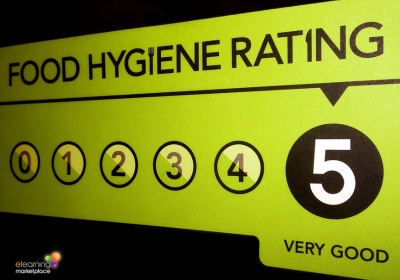
Inspectors base food hygiene ratings on more than how food is handled and the premises’ cleanliness. Food businesses must show they manage food safety with the processes, training, and systems that uphold standards between inspections. Find out how food hygiene ratings work.
Why certificates alone may not be enough
A certificate normally shows that someone completed a course or passed an assessment on a particular date. It may not show:
- Whether the employee can apply the learning
- Whether their knowledge remains current
- Which job-specific instructions they have received
- Whether they have been trained following a change in procedure
- Whether a manager has reviewed their competence
- When refresher training is due
- Whether identified weaknesses have been addressed

For example, someone who completed a food hygiene training course three years ago could have transferred to a supervisory role since completing their training. They would still hold a valid certificate for a food handler, but would not have received training for a supervisory role, including monitoring critical controls, managing allergens or supervising other employees.
Why move to digital training records?
Paper records can be an effective means of keeping track of an employee’s training and development, as long as they are complete, up-to-date and easy to use. There is no mandatory requirement for digital training records to be completed, so relevant food safety records can be kept in either print or electronic format. However, digital records can make it considerably easier to produce reliable evidence during an inspection and for management of learning and development.
Information can be found quickly
An Environmental Health Officer (EHO) can turn up unannounced when owners, training managers or senior chefs are not available. A central digital system enables an authorised manager to retrieve records without searching through folders, emails and filing cabinets.

Records remain current
A learning management system can show course completions, assessment results and renewal dates. Automated reminders can alert managers when refresher training is due or a certificate is approaching expiry.
Gaps are easier to identify

Managers can see which employees have not completed essential training and whether the gap affects a particular shift, department or location.
Evidence is more consistent
A learning management system reduces the risk of missing dates, signatures or course details. It also creates a clearer audit trail across the business.
Multiple sites can be monitored
Any business group or multi-site business will be able to monitor and track training provided to employees across all sites. They can provide individual managers with access to log on and view records of employees that work on their site or in their team.
Certificates are supported by wider evidence
A good digital system can combine certificates with induction records, assessment scores, refresher training, practical observations and corrective actions.

What should a digital training record contain?
Recommended minimum records:
- Employee’s name and role – Connects training to their responsibilities
- Workplace or site – Confirms where the employee is authorised to work
- Course or instruction completed – Identifies the subject covered
- Training provider or instructor – Shows who delivered the learning
- Completion date – Demonstrates when training took place
- Assessment result – Provides evidence of understanding
- Certificate or supporting document – The formal evidence to prove training has taken place.
- Practical competence check – Shows whether learning is applied at work
- Refresher or review date – Helps prevent training from becoming outdated
- Manager approval – Checks the record for the manager.
- Remedial action – Records how weaknesses were addressed

Records could cover food hygiene, allergen awareness, HACCP, cleaning procedures, temperature control, cross-contamination, personal hygiene, illness reporting and any specialist responsibilities associated with the employee’s role.
Five steps to become inspection-ready
- Audit existing records
By comparing your employees to your current training records, you can look for missing training certificates, for example, incomplete inductions, expired training, and employees with changed job responsibilities. - Match training to roles
Don’t deliver the same generic training to all employees. Training needs to be considered on an individual basis depending on their role. For example: a delivery driver, a kitchen assistant, a chef, a supervisor and a food safety manager all require different levels of knowledge. - Record instruction as well as courses
In addition to listing training courses that an employee has completed, include details of any talks, demonstrations, practical sessions etc that have been carried out in the workplace. These give proof of ongoing training. - Check competence
Knowledge checks throughout courses will help evidence that learning has taken place and that it has been applied. These tests should be recorded and any necessary action taken in the event that the employee has not reached the necessary standard. If using online training and a learning management system this will automatically occur for all training. - Test access before an inspection
Make sure that the authorised manager has been given access to your digital records. Check that records can be retrieved quickly, including during an internet or device failure where reasonably practicable.
Protect employees’ personal information
Digital training records contain personal information about employees, therefore need to be managed in accordance with the relevant data protection legislation in the UK.
Limit access to appropriate individuals and keep accurate, up-to-date records. These must be stored securely and only kept for an appropriate amount of time. Businesses must also have appropriate processes for dealing with the records of former employees as well as the appropriate method for deleting unnecessary information.

Digital records support, but do not replace good practice
A sophisticated learning management system cannot compensate for poor hygiene, weak supervision or employees who do not understand safe working procedures.
The strongest evidence combines:
- Appropriate training
- Accurate, accessible records
- Effective supervision
- Observed employee competence
- Consistently followed food safety procedures
- Prompt action when something goes wrong
Be ready to demonstrate competence, not just course completion
The purpose of training records is not simply to prove that employees have clicked through a course. They should help the business confirm that people have the knowledge and skills to handle food safely.
Up-to-date digital records give managers a clearer view of compliance, make gaps easier to address and provide EHOs with accessible evidence during an inspection. Most importantly, up-to-date digital training records promote a proactive food safety culture where employees recognise that their training is an on-going responsibility and not a one-off certificate.
You may also like:
Why Smarter Learning Unlocks Employee Potential and ROI
Why Hospitality’s Biggest Risk Isn’t Costs, It’s Capability
Ultimate Guide: Food Safety Compliance and Training
Author: Carolyn Lewis