 UK: 0844 854 9218 | International: +44 (0)1488 580017

For small and medium-sized enterprises (SMEs), developing a cost-effective learning and development (L&D) strategy has become essential for attracting talent, improving employee performance, and driving long-term business growth. Whether you’re a growing business in the UK or elsewhere in the world, investing in affordable staff training can help bridge skills gaps without stretching your budget. This guide explores practical and affordable L&D solutions for SMEs, helping business owners, HR professionals, and learning leaders create a sustainable workforce development strategy that delivers measurable results while supporting organisational success.
People are generally an organisation’s most valuable asset. For SMEs, this is particularly the case. Whether you’re running a manufacturing company in rural Cumbria, a professional services firm in Birmingham, or a growing technology business in Cornwall, investing in employee development can drive productivity, innovation, and long-term business growth.
While SMEs recognise the value of investing in their staff’s ability to learn and develop, they often find it challenging to implement an affordable Learning and Development (L&D) strategy. Many organisations lack the budget to spend on formal training, have the time to take staff away from work, and have employees to manage the learning process while tackling day-to-day business issues.
The good news is that effective L&D does not have to cost the earth and can be simple to implement for SMEs. In fact, with the right approach, businesses can develop a workforce who are more engaged, skilled and able to drive business growth.
What Is a Learning and Development Strategy?
An L&D strategy (download our free L&D Strategy guidance and template) is a structured plan which aligns training of employees with the overall business objectives. An effective L&D strategy, rather than delivering training on an ad-hoc basis, helps businesses:
- Identify skills gaps
- Improve employee performance
- Support career progression
- Enhance employee retention
- Increase productivity
- Prepare for future business challenges
The key aim for SMEs of all sizes is to ensure that every training investment brings measurable value to both employees and the organisation.
Once you have written your L&D strategy, it helps if you create an L&D Strategy Implementation Plan (download our free L&D Strategy implementation Plan guidance and template) which serves as a roadmap for turning your organisation’s strategic vision into actionable steps that achieve desired outcomes. It ensures that the strategy is executed effectively, efficiently, and in alignment with organisational goals and objectives.
Step 1: Assess Your Current Skills and Capability Gaps

Before you can invest in training and other development activities it is worth establishing where your organisation currently is in terms of skills and capability. Consider:
- Which skills are currently lacking within your teams?
- What challenges are affecting productivity or performance?
- Is there any training required by law for employees to complete?
- What future skills will be needed as the business grows? (refer to your organisation’s business plan)
Our free Roles and Competency Mapping guidance and template, along with our free Training Needs Analysis guidance and template can help you with this task. Doing a simple skills audit can be an excellent way to identify development opportunities for your teams, in addition to ensuring that every training investment brings the required value to the organisation and employees.
Gathering feedback from your employees and your managers can also highlight any training and development opportunities that will aid your employees and your organisation.
Step 2: Align Learning Objectives with Business Goals
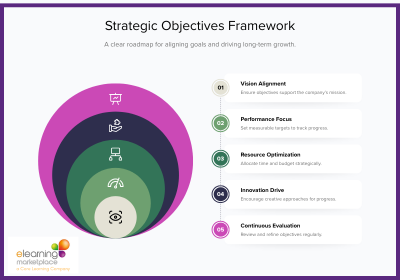
The biggest mistake SMEs make with training is that it is not aligned to business objectives. Your learning and development strategy should support objectives such as:
- Increasing sales performance
- Improving customer service
- Enhancing leadership capability
- Supporting digital transformation
- Strengthening compliance and risk management
- Preparing employees for promotion
By linking your learning and development activities to your business objectives it is easier to demonstrate the return on investment that leadership are looking for, as well as gaining their support for future L&D activities.
Step 3: Create a Learning Culture
Training should not be a single event. Successful SMEs foster a culture of continuous learning and encourage employees to:

- Share knowledge and best practices
- Take ownership of personal development
- Participate in mentoring programmes
- Attend industry events and workshops
- Complete online learning modules
Employees who work for businesses that promote ongoing learning and development are more engaged and less likely to leave their jobs, as survey statistics backup:
- 76% of employees are more likely to stay with a company that offers continuous training1
- Organisations with comprehensive employee training programmes report 218% higher income per employee compared to those without formalised training1
- 92% of employees say well-planned training programs positively impact their job engagement1
- 94% of employees say they would stay longer at a company that invests in their continued learning and development 2
A commitment to a learning culture will also enable SMEs to attract and retain the best people to work for their business in highly competitive recruitment markets.
Step 4: Choose Cost-Effective Learning and Development Solutions
SME’s rarely have the budget of larger organisations, but that doesn’t mean that effective learning is out of reach. Affordable learning solutions include:
Online Learning
Online learning is highly cost-effective for SMEs and doesn’t sacrifice quality by offering high quality, engaging and interactive learning, which learners can revisit time and time again. It significantly reduces expenses such as travel, venues, and resources. Online learning also drastically minimises employee off-the-job time and can be delivered at the point of need.

Consider different online training purchasing options and don’t make the mistake of purchasing an annual licence for a lot of training that doesn’t get used. eLearning Marketplace offers a variety of different purchasing options, so that you can buy the training that meets your requirements, both in terms of topics and quantity. Purchasing models are:
- Pay-as-you-go
- Publisher enrolments
- User enrolments
- Annual subscription licence
Learning Management System (LMS)
Most SME’s don’t require a sophisticated LMS loaded with a vast array of functionality. A basic LMS typically offers the essential tools to manage learning and training content, and offers basic assessment tools and progress tracking. They enable training to be delivered remotely, track completion rates, measure learner progress, store compliance records and provide personalised learning pathways. These platforms also provide user authentication, automated reporting for course completion and the issuing of certificates.
If you ask AI for the cost of a basic LMS for 50 users it will tell you between £2,000 to £5,000 per year, with premium versions costing between £10,000 and £50,000 for 50 users. If your budget is small, it’s imperative that you purchase an LMS that meets your requirements now and as the business grows.
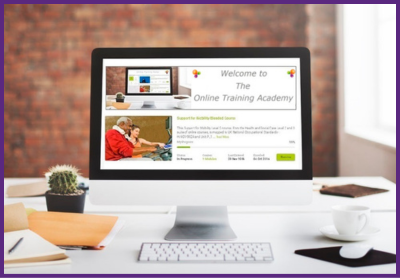
Ascertain the LMS features that you will actually use. Far too many organisations buy into an LMS and only use a fraction of the functionality, e.g. they don’t use the gamification or integrated AI tools, or the vast range of analytic reports, all of which you pay for.
eLearning Marketplace has a wealth of experience of SME learning and development, and offers a basic LMS for 50 users for £300/year. It’s a no-frills solution that offers an LMS that is:
- A web-based platform
- Hosted and fully managed
- Accessible by anyone, anywhere, and at any time
- Simple to implement: No need for your IT department to get involved
- Hassle-free control
- Intuitive and easy to use interface
- Administrator portal
- Tracking and reporting
More and more LMS platforms come with integrated training content, that is either prescribed by the provider or offers you a choice of course topics to meet your training requirements, as eLearning Marketplace does.
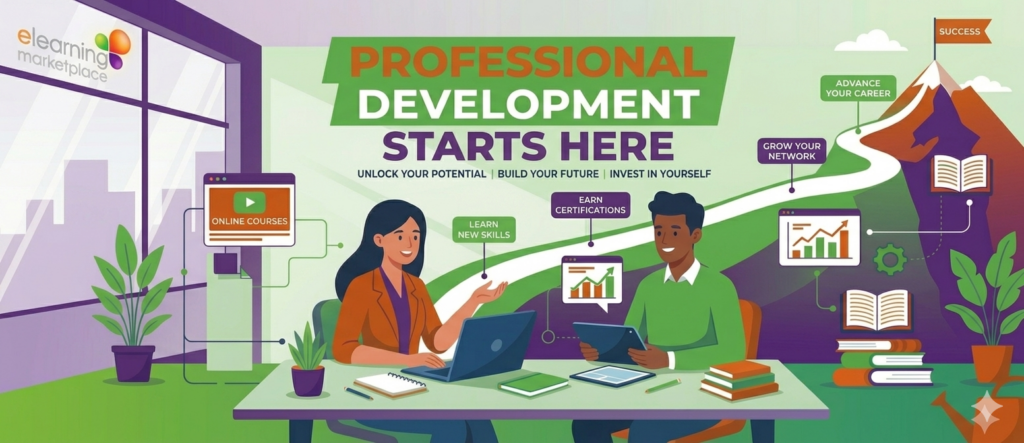
This content can be accessed at any time and at any location, whether in an office, construction site or at home.
Popular course topics include:
- Compliance
- Leadership and management
- Communication skills
- Customer service
- Cybersecurity awareness
- Digital marketing
- Soft skills
Knowledge Sharing
Sharing knowledge from more experienced employees is very effective and even cost efficient. Examples include, lunch-and-learn sessions, team workshops, peer mentoring, cross-department training and coaching and mentoring. Mentoring programmes aid the development of employees’ confidence, leadership skills and practical knowledge of how to apply what they have learned in the workplace. To find out more about implementing a mentoring programme take a look at our Ultimate e-Guide: Unlocking Success with Workplace Mentoring
Step 5: Gain Employee Buy-In

Even the best plan will not work if employees are not willing to participate. To improve participation, communicate the benefits clearly, involve employees in development planning, offer flexible learning opportunities, recognise achievements and progress, and connect training to career development opportunities.
Employees are more likely to engage with learning and development when they can see how it will support their role and their future career.
Step 6: Measure Success and Demonstrate ROI
The learning and development strategy for an SME should be monitored and evaluated on an on-going basis. Establish clear objectives and measure performance against these to measure the success of any L&D strategy. Key performance indicators may include:
- Employee engagement scores
- Staff retention rates
- Productivity improvements
- Customer satisfaction levels
- Training completion rates
- Internal promotion statistics
By tracking the results of the learning and development activities of your SME, you can fine-tune your approach and spend your budget on the most effective learning activities. Our free L&D Strategy Implementation Plan guidance and template will help you to do this.

Implementing a structured learning and development strategy helps organisations:
- Address skills shortages
- Improve workforce resilience
- Support business growth
- Increase employee satisfaction
- Remain competitive in regional and national markets
By combining online learning with overseen application in the workplace SMEs can develop a high performing team within their budget.
Common Challenges When Implementing an L&D Strategy
Many SMEs encounter obstacles such as limited time and it is not easy to find time for training within a busy operational environment. Embedding learning at the point of need or in planned short learning durations, which online learning enables you to do, are the most effective methods to ensure that training actually happens, is valued and meets the organisation’s objectives.
Conclusion
Putting in place a new L&D strategy is one of the best investments an SME can make. By delivering training that is relevant to the goals of the business and using affordable development tools to create a culture of continuous learning, organisations can improve performance, retain employees and ensure future growth and success. A well implemented L&D strategy will create a sustainable competitive advantage for your organisation to drive long-term success.
You may also like:
Why Financial Literacy for Non-Financial Employees Improves Business Performance
Why Smarter Learning Unlocks Employee Potential and ROI
Ultimate Guide: Unlocking Success with Workplace Mentoring
Author: Carolyn Lewis
Sources:
1. https://www.lorman.com/blog/post/39-statistics-that-prove-the-value-of-employee-training
2. https://learning.linkedin.com/resources/career-development/develop-employees