 UK: 0844 854 9218 | International: +44 (0)1488 580017
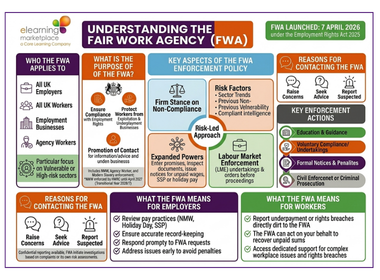
The Fair Work Agency (FWA), which was launched on 7 April 2026 under the Employment Rights Act 2025, is the body responsible for enforcing employment rights across the UK.
Who the FWA Applies To
The FWA applies to all UK employers, workers, and employment businesses, including agency workers, with particular focus on vulnerable or high-risk sectors.
What is the Purpose of the FWA?
The agency’s purpose is to ensure compliance with employment rights, to protect workers from exploitation and underpayment, and to promote fair competition between businesses
The Agency’s policy sets out to support compliant employers, clarify employment rights and create a ‘single point of contact’ for employees and employers to access information and advice on these rights.
The Agency will incorporate the existing inspectorate responsible for enforcing the National Minimum Wage, agency worker regulations and modern slavery legislation. However, 2026/7 is a transitional year; to ensure all powers required by FWA are in place, enforcement of the National Minimum Wage will continue to be contracted out to HMRC until April 2027.
Key Aspects of the FWA Enforcement Policy
Enforcement is approached with a focus on proportionality, consistency, transparency, and targeting.
The agency will take a firm stance on non-compliance, adopting a risk-led approach to enforcement, meaning enforcement activity will be prioritised based on risk factors such as sector trends, previous non-compliance, worker vulnerability, and intelligence received from complaints or other agencies.
Expanded powers have been granted to the FWA to allow them to enter premises, inspect documentation and issue notices to individuals and/or businesses where unpaid wages, statutory sick pay or holiday pay is due. The agency will use Labour Market Enforcement (LME) undertakings and orders before proceeding with civil or criminal proceedings.
Key Enforcement Actions
The FWA will generally adopt a staged approach to enforcement:
- Education and guidance
- Voluntary compliance/undertakings
- Formal notices and penalties
- Civil enforcement or criminal prosecution for serious breaches
The FWA can require employers to pay arrears to workers within 28 days. The penalty for underpayment can be up to 200% of the amount of the underpayment, capped at £20,000 per worker. The agency can bring tribunal proceedings on behalf of workers, and is able to collect the cost of its enforcement efforts from non-compliant employers. The agency may look back over historic underpayments.
Reasons for Contacting the FWA
Workers and employers can contact the FWA directly to raise concerns, seek advice, or report suspected breaches. Reports may be made confidentially, and the FWA may initiate investigations based on complaints or its own risk assessments.
What the FWA Means for Employers
What this means for employers:
- Review pay practices: National Minimum Wage, holiday pay and statutory sick pay
- Ensure accurate record-keeping
- Respond promptly to FWA requests
- Address issues early to avoid penalties
What the FWA Means for Workers
What this means for workers:
- You can report underpayment or rights breaches directly to the FWA
- You may not need to bring a claim yourself in some cases
- The FWA can act on your behalf to recover unpaid sums
Summary
Summary
The Fair Work Agency represents a significant shift toward a more coordinated and proactive system of employment rights enforcement in the UK. Its focus on accessibility, risk-based enforcement, and stronger powers is intended to both support compliant businesses and ensure workers receive the rights they are entitled to.
For more information, go to the UK Department for Business & Trade
Author: Carolyn Lewis