 UK: 0844 854 9218 | International: +44 (0)1488 580017
Environmental sustainability refers to the responsible, optimum use of resources to meet present needs without compromising the ability of future generations to meet their needs. In business, environmental sustainability means that a company works to reduce its waste, increase its energy efficiency, decrease the amount of carbon dioxide it emits, and generally make choices that are environmentally and socially responsible in the long run, and also good for profitability.
Environmental sustainability is one of the three recognised pillars of sustainability:
- Environmental: Protecting ecosystems, air, water and land while reducing pollution and conserving natural resources.
- Economic: Ensuring sustainable practices are financially viable and support long-term business growth.
- Social: Promoting health, wellbeing, equity and positive outcomes for employees, communities and society.
Environmental sustainability is no longer a ‘nice-to-have’ initiative, designed as a performative way to tick a box without making any genuine changes. It is now a core value of modern organisations that all employees and customers are expected to adhere to.
Sustainability can support wider organisational goals, not only environmental ones, helping to position sustainability as a business strategy rather than simply a moral responsibility. Governance around environmental responsibility is becoming more and more important. Customers, investors and even regulators are requiring organisations to have an understanding of the environmental impact of their activities and to report on it.
Sustainable workplaces often benefit from:
- Lower energy and operating costs.
- Improved employer brand.
- Ability to attract talent, particularly younger workers.
- Increased employee engagement and morale.
- Stronger reputation with customers and clients.
- Better preparedness for future regulations and reporting requirements.
There is a lot to learn on the journey to becoming a greener workplace. Championing sustainability isn’t always about big gestures or expensive initiatives, but little things can make just as big a difference.
Little things can make a big difference
Here are 5 of the key things to remember.
1. Culture is more powerful than policy
Policies rarely drive change on their own. What actually shapes the day-to-day behaviour within a workplace is the culture it promotes. What does the organisation value? What is your attitude towards sustainability and awareness? These unwritten rules influence how people act when no one is watching. Environmental sustainability should be instinctive, not happening just because a document says it should, but because it is the right thing to do. Over time, culture quietly becomes the strongest driver of environmental action.
2. Engagement matters

Environmental sustainability initiatives are far more effective when people feel involved and able to contribute their own ideas, rather than being told what to do. Whilst this can create short-term compliance, it rarely builds long-term commitment and genuine change. This means creating opportunities for people to contribute ideas, ask questions, and understand the reasoning behind environmental decisions. When employees can see the impact of their actions and feel that their voice matters, they are more likely to participate actively.
Everyone in the organisation must live the environmental messages of the organisation. The behaviors of managers are always under a microscope. So, it is critical that managers practice what they preach. For example, if a manager does not use the recycling bins, prints their emails, or leaves lights on when he/she is out of his/her office, then the organisation’s environmental initiatives will be seen for what they are: just another short-lived initiative.
Celebrating your achievements along the way will keep your employees engaged with your environmental goals and will reinforce the organisation’s values of environmental responsibility. By demonstrating how individual actions can contribute to real change, you can harness their creativity and enthusiasm to achieve more.
3. Make sustainable choices the easiest choices
People naturally gravitate toward actions that are simplest, quickest, and most convenient for them. If it is complicated or time-consuming, it is less likely to happen. Working towards environmental sustainability doesn’t have to be difficult. This can include simple things such as turning the lights off when you leave a room, defaulting to digital communication instead of printing and making recycling facilities visible. Small, seemingly inconsequential changes can have a long-term impact on how you operate and how your employees behave.
4. You can’t change what you don’t know
If you don’t know what you need to know in order to change, you cannot be expected to make these changes. Before you can make changes, you need to first see where you’re at now so you can decide where you want to be at the end. Download and complete our free SME Waste and Energy Audit Template. You can then use the information you have gained to make changes that will improve your energy efficiency and overall green rating. Once you understand where you are competent, where you are incompetent, and the reasons behind certain actions and decisions, you can begin to make targeted, effective improvements.

5. Don’t focus on the final destination
Sustainability is often presented as a target to reach, a one-time thing that doesn’t require consistent attention. The work doesn’t just end because you are net zero by a certain year or have reduced emissions by a certain percentage. You can’t wait for sustainability to happen to you – it happens because of you. There will always be ways to improve, and you should always be looking for areas to expand, grow and be better. Setbacks will happen, but what matters most is moving forward and continuing to work towards sustainability step by step.
To enable you to assess the organisation’s progress of these steps, set relevant, simple, time-bound and measurable goals that staff have contributed to, not just vague ambitions, and that everyone can work towards. For example:
- Reduce office energy use by 10% over 12 months.
- Cut paper consumption by 50%.
- Increase recycling rates by 40%.
- Reduce business travel through virtual meetings by 50%.
Sustainability and employee wellbeing
To broaden sustainability beyond simply reducing carbon emissions, consider staff wellbeing. For example:
- Bringing plants into the workplace.
- Improving natural light.
- Encouraging walking or cycling to work.
- Supporting hybrid working where appropriate.
- Reducing waste while creating healthier workspaces.
Five environmental sustainability actions you could implement this month:
- Carry out a simple waste and energy audit – download our SME Waste and Energy Audit Template
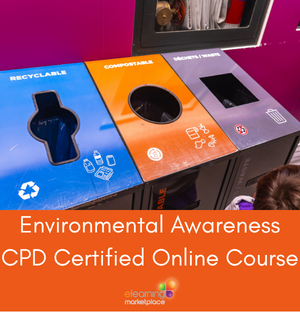
- Introduce clearly labelled recycling stations.
- Use digital communication instead of printing.
- Ask employees for one sustainability improvement idea.
- Review suppliers for environmentally friendly alternatives.
Conclusion
Sustainability isn’t achieved through one ambitious project; it is built through thousands of everyday decisions. By creating a culture where environmental responsibility becomes second nature, organisations can reduce their impact while building a more engaged workforce and a more resilient business for the future.
You may also like:
A Guide to Implementing an Affordable L&D Strategy for SMEs
UK Whistleblowing Law 2026: A Guide for Employees and Employers
How AI is Reshaping Employability & Digital Literacy in the UK Job Market
Authors: Maguire Training and eLearning Marketplace