 UK: 0844 854 9218 | International: +44 (0)1488 580017

Sales technology is evolving rapidly. AI and automation now handle much of the data-heavy lifting. Yet the moment of sale itself still rests on a foundation that has not shifted: trust.
Trust is the quiet confidence a client feels that you, your team, and your business will genuinely advocate for their best interests. In sales, it is also a commercial driver. Built on delivering what you promise and operating without hidden agendas.
This bond hardens over time. Through a mix of expertise, honesty, and the consistent habit of prioritising the client’s needs over personal gain.
Trust as the Engine of Long-Term Success
Trust is what transforms a cold transaction into a collaborative partnership. When a client trusts you, the walls come down. They stop giving you a filtered version of their challenges and start sharing the real challenges and goals that actually matter.
This transparency allows you to provide more relevant solutions and helps the client feel genuinely understood.
Trust also reduces hesitation. When a buyer believes in the person behind the advice, they spend less time second-guessing and more time moving forward. Objections lose their edge, decisions happen faster, and that initial sale grows into a cycle of loyalty and referrals.
Trust Equation
A powerful way to visualise this is through the Trust Equation, introduced in The Trusted Advisor by David Maister, Charles Green, and Robert Galford.
The equation shows that trustworthiness is built on credibility, reliability and intimacy. But it is all balanced against your own self-orientation.
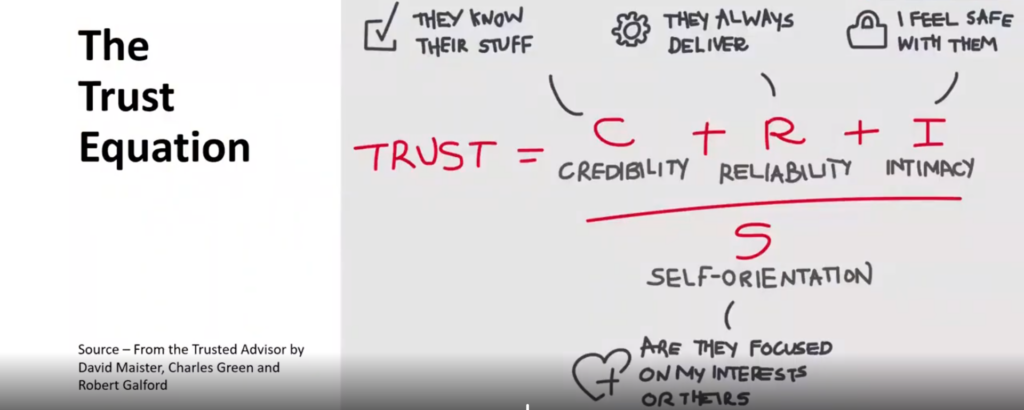
While most of us don’t pull out a calculator during a meeting, we are all instinctively measuring these traits. Every follow-up email and every bit of body language under pressure sends a signal about whether you are “safe” to work with.
A good rule of thumb? If a behaviour would feel unacceptable if directed at you, it’s likely eroding trust when you use it on others.
Transactions vs. Real Relationships
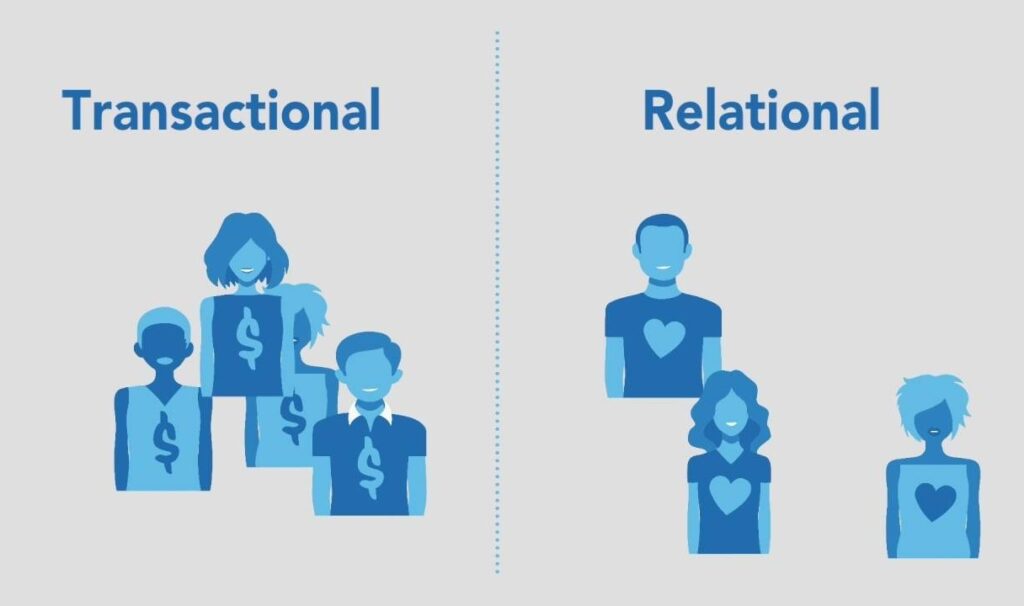
In a simple transaction (like buying a pair of shoes online), we trust the process more than the person.
Professional sales relationships involve personal judgement and higher stakes.
Trust is sometimes extended in good faith and later broken, and when that happens, the impact is real. Confidence is affected, and the experience is rarely forgotten.
These moments, however, often sharpen judgement and inform better decision-making in future relationships.
As Harvard Business Review puts it, trust is the “social glue” of business. It allows partners to stop wasting energy protecting themselves from being exploited and start focusing on achieving better outcomes together.
Why Trust Matters More Than Ever
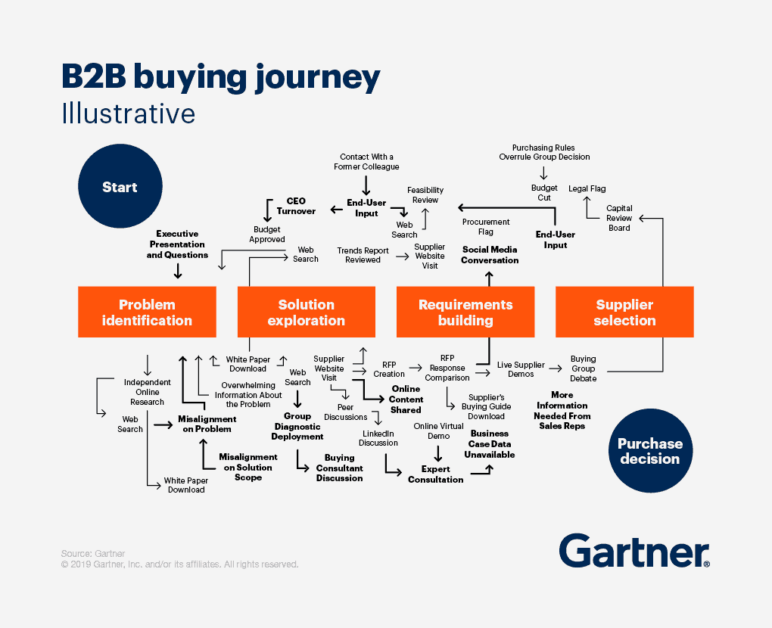
Trust is the primary differentiator today for one clear reason: we are all constantly saturated with information.
- Making sense of complexity: Buyers want advisors who help them cut through the noise, not just sell a product.
- Reassurance in uncertain decisions: Trust provides a sense of safety when choices feel risky.
- When everything looks the same: Buyers choose the person they can rely on, even if they aren’t the cheapest option.
- Rebuilding buyer confidence: Many buyers are fatigued by aggressive tactics. Genuine trust restores confidence and creates connection.
The Foundations of Building Trust
Building real trust requires a shift in mindset, moving away from being self-focused and toward a truly client-centric approach.
It begins when a client feels understood. It is because you are listening deeply, asking open questions, and showing genuine curiosity about their world.
But being a good listener is only half the job. Your clients need to know you have actually got the capability to solve their problems. You prove that by bringing real insights and evidence-based ideas to the table.
From there, trust is reinforced through reliability. Whether it is a quick reply to an email or meeting a deadline, consistent small actions set the tone for your larger promises.
This professional reliability must be balanced with human connection. People are more likely to trust those they feel comfortable with, so adapting your communication style to create rapport is essential.
When you communicate with authenticity and high emotional intelligence, clients can sense that there is no hidden agenda. This creates a safe environment where a client feels they can speak openly about their constraints.
How Trust Dissolves
Trust usually doesn’t vanish in a single moment; it leaks away through patterns of behaviour. Overpromising, failing to admit mistakes, or being inattentive to client needs are the fastest ways to erode a relationship.
Trust breaks down when there is a disconnect between what you say, what you do, and what you are actually thinking.
The Outcomes of Trust-Led Selling
When trust sits at the heart of your approach, the outcomes are clear over time. Relationships deepen, influence grows, and communication becomes more open and effective.
By prioritising trust, sales professionals strengthen their position as trusted advisors. This creates genuine value for clients and supports sustainable commercial outcomes over time.
Author: Vinit Shah, Founder & Managing Director of London School of Sales