 UK: 0844 854 9218 | International: +44 (0)1488 580017

Black Friday and Christmas shopping, rather than being a time to celebrate money-saving deals and festive joy, can turn into a period of frustration, helplessness, and anxiety for those who fall victim to scams. According to the BBC and Feedzai, the global leader in AI-native financial crime prevention, more than 50% of Fraud is now driven by AI and Hyper-Realistic Impersonations.
In 2024 UK shoppers were scammed out of £11.4 million, with every victim losing an average of £1,4001. In a recent report published by National Trading Standards, 6.4 million UK shoppers lost money after clicking on fake online ads2. Barclays reported that social media is the most common online platform for scams, with approximately 75% of all scams reported to have started on social media or another tech platform3. Unfortunately, the prediction is that these numbers will increase this year.
Many would say that the over 65 year olds are the most likely age group to be targeted and fall victim to scams; however, research by Natwest found that young adults aged 18-24 were the most targeted by scams in 2024, with 60% either suffering financial losses themselves or knowing someone who did. In comparison, only 15% of individuals over 65 reported being aware of financial losses affecting themselves or someone they know4.
The UK’s National Cyber Security Centre, (NCSC) and other global fraud intelligence agencies are warning that fraudsters are leveraging Artificial Intelligence (AI) to develop even more malicious and convincing scams, for example:
- Personalised emails and text messages that look like they are genuinely from legitimate companies
- Fake websites that are difficult to differentiate from the real company
- Fake social media ads from very authentic looking retailers
- Fake shopping apps that replicate well known brands
- Sophisticated customer service chat bots that are actually fake and steal your information
As AI technology evolves, scammers are able to make their deceptive information appear authentic and believable. For example, AI driven social engineering tactics are being used to impersonate a famous person endorsing a fake product, or to convincingly enable a fraudster to become a fake individual capable of communicating with emotion and building relationships to engage their victims. Fake parcel delivery texts are one of the fastest growing scams in 20255, so it is highly likely that this scam is going to impact huge numbers of people this festive period as parcel delivery ramps up.
No industry is safe from the fraudsters; last Christmas the BBC reported that a large number of consumers were being scammed by social media adverts for luxury advent calendars. This year Citizens Advice research found that 26% of those personally deceived by scams were duped while online shopping, for example, fake websites and counterfeit or non-existent goods6. In the last few years there has been an increase in Black Friday and Christmas scams involving DIY products, interior furnishings and garden products, such as patio heaters, as people are spending more time at home7.
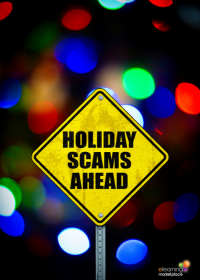
Holiday booking scams increased in early 2025, as fraudsters recognise that the festive period is a popular time to take a well-earned break. Scammers are using AI to create wonderful holiday itineraries, luring us in with beautiful photos and exciting activities. Beware of scammers exploiting AI to produce hundreds of glowing reviews for businesses that don’t actually exist. Tripadvisor identified and flagged 2.7 million reviews on its platform as fake over the past year8.
For many years it has been possible to spot scam communication because of typing errors, mis-spelt words or poor grammar, however with the use of AI communications these are pretty much eliminated and written communication is far better. So how do we protect ourselves against scammers? The National Cyber Security Centre (NCSC) is advising us not to be drawn into offers that have a limited time to buy or look too good to be true, as they probably are. Everyone likes a bargain, and the scammers know this, so they take advantage of shoppers desire to spend less, especially in times of a cost of living crisis. Also if an item is being advertised as being scarce or hard to obtain, don’t feel under pressure to buy it. Do your research and look at alternative suppliers and options. For guidance from NSCS on shopping securely take a look at Shopping and Paying Online Securely.
Everyone needs to ensure that they are keeping themselves safe, so do take a look at the NCSC excellent guide on taking your email security to another level. If you’d like to learn more about cyber security then take a look at our range of short online courses on topics such as phishing, malware, browsing safely and information security:
For more information on Cyber Security take a look at our Ultimate Guide: Essential Cybersecurity Strategies in 2025
Author: Carolyn Lewis, Learning and Development Technology Specialist, Trainer and Head of Business Development
Sources:
1. State of Scams UK
2. 64 Million UK Shoppers Scammed After Clicking on a Fake Ad
3. Fraud and Scams – What Lessons Did We Learn in 2024?
4. Fastest Growing Scams of 2024
5. 5 Scams to Look out For
6. Millions Stung by scams with online shopping
7. Protecting Against Festive Scams
8. Trip Advisor