 UK: 0844 854 9218 | International: +44 (0)1488 580017
SME Waste and Energy Audit Template
What is the purpose of this waste and energy audit template?
This waste and energy audit template helps small and medium-sized enterprises (SMEs) identify where energy and resources are being used, where waste is generated, and opportunities to reduce costs, improve efficiency, and lower environmental impact
Who should use this template?
The template is designed for SMEs across manufacturing, office, retail, and service sectors. It can be adapted to suit different business types and operational sizes.
What information do I need before starting the audit?
Gather basic business information such as company details, annual turnover, floor area, operating hours, energy bills, waste disposal records, and any available water consumption data.
What are the main objectives of the audit?
The audit aims to:
- Identify major energy users
- Identify waste streams
- Reduce operating costs
- Improve resource efficiency
- Reduce carbon emissions
- Support environmental compliance
- Identify recycling and circular economy opportunities
What types of energy should be included?
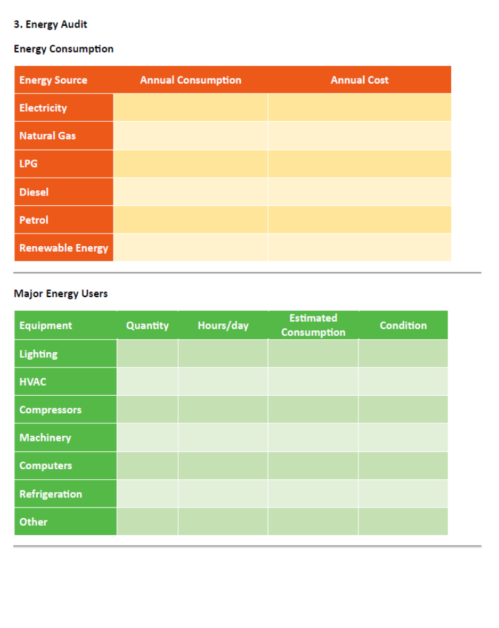
The template allows you to record consumption and costs for:
- Electricity
- Natural gas
- LPG
- Diesel
- Petrol
- Renewable energy sources
Which equipment should be assessed during the energy audit?
Typical major energy users include:
- Lighting
- HVAC systems
- Compressors
- Machinery
- Computers
- Refrigeration equipment
- Other significant energy-consuming assets
Why is the building assessment important?
Assessing insulation, windows, doors, heating and cooling controls, and lighting controls helps identify opportunities to improve energy efficiency and reduce unnecessary energy losses.
What waste streams should be recorded?
The template includes:
- General waste
- Paper and cardboard
- Plastics
- Metals
- Glass
- Food waste
- Hazardous waste
- Electronic waste
- Wood
Should I assess where waste is generated?
Yes. The template encourages identifying waste generated by different departments, such as offices, production, warehouses, kitchens, and maintenance areas, while considering whether waste is avoidable and recyclable.
Is water use included?
Water assessment is optional but recommended. The template includes recording water consumption and identifying opportunities such as leak detection, low-flow fittings, rainwater harvesting, and water reuse.
What types of improvement opportunities should I identify?
Examples include:
- Replacing fluorescent lighting with LEDs
- Installing motion sensors
- Upgrading HVAC controls
- Improving insulation
- Installing variable speed drives
- Solar PV systems
- Increasing recycling
- Reducing packaging
- Composting food waste
- Digital documentation
- Employee awareness programmes
Does the template consider carbon reduction?
Yes. It includes a section to estimate carbon reduction opportunities from actions such as LED lighting, renewable electricity, improved recycling, vehicle efficiency, and energy-efficient equipment.
How should improvement actions be prioritised?
Actions can be classified as High, Medium, or Low priority, with assigned responsibilities, target dates, and progress status to support implementation.
Which Key Performance Indicators (KPIs) should be monitored?
The template recommends tracking monthly:
- Electricity consumption
- Gas consumption
- Energy costs
- Waste generated
- Recycling rate
- Waste sent to landfill
- Water consumption
- Carbon emissions
- Energy use per employee
- Waste generated per employee
How often should the audit be completed?
The template recommends monitoring KPIs monthly and repeating the full audit annually to measure progress and identify new improvement opportunities.
What outcomes can businesses expect from completing the audit?
The audit is designed to help identify:
- Major energy users
- Significant waste streams
- Areas of excessive energy consumption
- Recycling opportunities
- Potential cost savings
- Estimated reductions in energy costs, waste disposal costs, and carbon emissions
Does this template support environmental certification?
The template can support continuous improvement programmes and may form part of the evidence base for environmental management systems such as ISO 14001 and ISO 50001.
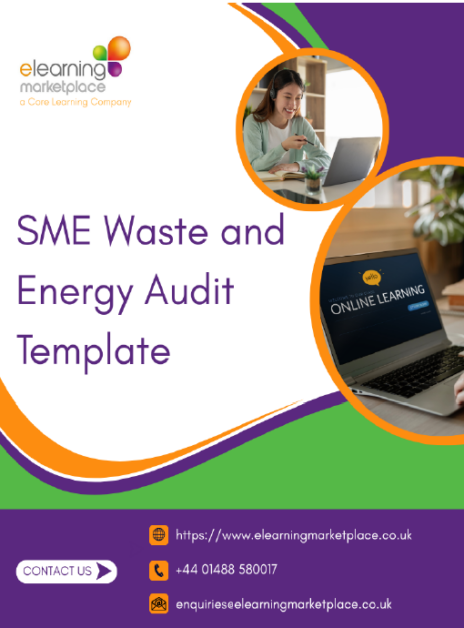
Screenshots of Audit front page and page 3 of 10: