 UK: 0844 854 9218 | International: +44 (0)1488 580017
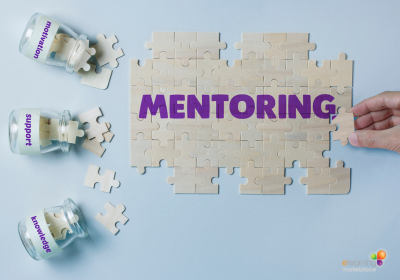
Mentoring reaches far beyond our working life. By definition, a professional mentor is someone with more experience and knowledge supporting someone new to the organisation who is learning and developing into their professional role. But if we unpack what “supporting” means then the mentor/mentee relationship is one built on trust. Trust to hold a professional safe space for ideas, worries, or criticisms.
A mentor is someone who can lend an ear, listen without judgement and offer constructive advice, even criticism. The saying goes “don’t take criticism from someone you wouldn’t go to for advice”. This in my experience is the foundation of a reliable and effective mentoring relationship.
It is open and honest communication whereby the mentor feels the reward of being beneficial and helpful to another – and the mentee feels trusted, heard, and supported.
Looking back on my career, I have taken on the role of mentor many times. I have mentored colleagues and new employees, newly qualified teachers, or students. But I have also been the mentee in all of these examples! It is a two-way street – a reap what you sow concept. I’ve benefitted from great mentoring. Knowing and experiencing those benefits has then enabled me to mentor others. The idea of mentoring is misleading as the definition would have us believe that a mentor is someone senior to ourselves. But beyond work, mentoring is everywhere. Let’s take a look at the benefits of mentoring and how this might apply to life in general.
Improved communication skills
Difficult conversations are never easy. But it has become easier in a digital world to avoid disagreements altogether. A simple comment and move on, a reaction emoji, a dislike and unfollow, content delivered through only an approving algorithm… The amount of time spent online has grown over the years. Ofcom reported in December 2025 that people spend on average 30 minutes more a day online than they did in 2021.
Being able to communicate concerns, share ideas, ask for advice are all skills practiced from mentoring and can be applied to our personal life. From conversations with friends about their mental health, or their relationships with ex-husbands or new partners, to navigating the fallouts of my daughter’s friendship circles…All of these conversations with friends or family come from a mentoring mindset. Seeking feedback, asking advice, and then being a confidante or advocate are all skills found in mentoring.
Increased self-confidence and resilience
Having close friends recently go through a difficult divorce, I’ve seen their confidence shatter and I’ve felt as a friend the need to pick up those pieces. To help them – in whatever way I can – be ready to hold each piece and put it back together again. Now out on the other side of it all, I can see how much they have grown, become stronger and more resilient.
One friend sent me New Year wishes last week. But she also wanted me to know that when she was at her lowest, I was someone who helped her more than I realise. Undoubtedly a beautiful thing to hear as a friend, I was truly touched by the moment. It is a moment I am choosing to share here because our friendship I know is one grounded and built on absolutely no judgement. We normalise our hard days and setbacks. Most of all, we always offer perspective and validation. It is a friendship that works BOTH ways. A two-way street.
Mentoring increases self-confidence and resilience and if we look only a little beneath the surface, we see that friendships too can have the same impact.

Better decision-making
Mentoring is driven by active listening. Somebody once said to me that being supportive doesn’t mean fixing everything, it could mean just hearing something. Offloading and feeling heard usually clears space in our heads to think clearer and make better decisions. I am Type 1 diabetic and I had a phone-call with my diabetes nurse this week. I wanted advice and guidance on the changes I’d made to my insulin therapy. Without realising, I was not just a patient but a mentee, being mentored from a clinical and healthcare point of view. My nurse listened empathetically and patiently. We discussed short term goals and lifestyle choices and in turn I have better decision-making when it comes to managing my diabetes.
Mentoring improves healthcare
The benefits of mentoring in healthcare are well-documented. Research conducted by the NHS found that mentoring was the most effective way to enhance work performance, for staff to feel valued, and to promote a culture of wellbeing and support. With mentorship being an integral learning and development method in healthcare, it is of no surprise that those same skills will transfer into clinical practice and crossover to patient care.
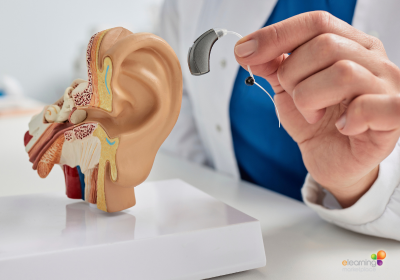
I caught up with Kirsten Ellis, Audiologist Mentor for The Hearing Care Partnership who kindly shared with me her views about mentorship and how it has impacted her life beyond work. Kirsten explained that in hearing care, mentoring is about far more than technical skill; it is about developing empathy, self-awareness, and the ability to truly listen.
She said: “As a hearing aid audiologist mentor, I see how creating a trusted space allows clinicians to reflect on emotionally complex consultations and strengthen the ongoing counselling skills that are central to our profession. Supporting patients through hearing loss requires patience, perspective, and compassion. These qualities are shaped and reinforced through mentoring. These same skills naturally extend beyond the clinic. Mentoring in healthcare not only supports better patient care, but also equips us to show up more fully in our personal lives, strengthening relationships, resilience, and our capacity to support others when it matters most.”
Greater Self-Awareness and Direction
If mentoring improves our communication, our self-confidence and resilience, and our decision-making, is it not a foregone conclusion that we would then gain greater self-awareness? If mentorship is about trusted space to hold difficult conversations or to bounce ideas around, then a natural outcome of this is reflection.

Mentoring gives us the ability to recognise our strengths and the habits holding us back. Being able to step back from stressful situations, reflect and review, are skills that overlap with Cognitive Behaviour Therapy. Mentoring in the workplace can reduce feelings of isolation and stress. Being reassured that such challenges are survivable ripples outwards. Individuals can apply the same approach and solutions to their own life in terms of personal goals, priorities, and boundaries.
I recently joined my local rugby club and am learning to play rugby. Being a part of the team for a sport I’ve never played before is mostly led by mentoring. From the coaching staff, the captain, and the rest of the team – mentorship in this team is everything. It grows naturally in a challenging environment. It promotes inclusivity and wellbeing and encourages you to be better, from fitness to confidence to leadership. I’ve been playing rugby for only 10 months and already these women are mentors to me, both on and off the pitch.

It has enabled me to gain greater self-awareness of how I respond or react to setbacks, defeats, and mistakes. I am aware more than ever of my own personal barriers to overcome. It’s not just diabetes and hearing loss on a pitch that requires me to be physically fit and communicative! When we step outside our comfort zones, mentoring can be the only source of comfort.
Why mentoring is meant-to-be
When mentoring is done right, it is personal growth and development on a completely human level, not just a professional one. Looking at these benefits, it is clear to see that mentoring is the definitive human connection. It is about listening without judgement, hearing what is being said, offering advice and guidance or another perspective. It’s being empathetic to what someone is going through or struggling with and holding a beacon for them to know that dark times (professional or personal) do not last forever.
Elon Musk threw empathy into the spotlight (and under the bus) last year by labelling it as “the fundamental weakness of Western civilisation”. There were many objections and counterarguments to his statement. Empathy is actually the linchpin holding us all together. Studies have shown how empathetic working environments lead to better collaboration, productivity, and overall success.

Mentoring is about putting yourself in another’s shoes, learning how they feel, and seeing things from their perspective. Mentoring is empathy in action. It’s about understanding each other to find a way forward. Not just a nice idea but the central purpose of mentoring. And ultimately how we should work, live, and play together as human beings.
Author: Helen German
You May Also Like:
- Ultimate Guide: Unlocking Success with Workplace Mentoring
- How to Onboard Staff Successfully
- How to Unlock In-House Talent with an Internal Mobility Strategy
If you’d like to learn more about mentoring or coaching, take a look at our range of Mentoring and Coaching online courses: